

As the Kouri Richins murder trial heads into a weekend recess before Week 2 begins March 2, the first six days of testimony have laid bare the central tensions of the case: disputed forensic evidence, a quietly denied mistrial motion, and a dramatic clash between two key witnesses over whether fentanyl was ever purchased at all.
A Denied Mistrial and What Comes Next
In a brief disclosure at the close of Day 5 on Friday, Judge Richard Mrazik confirmed that a mistrial motion had been filed at some point during Week 1 — though he did not identify who filed it or detail the grounds. He denied the motion and indicated he may elaborate on it when court resumes Monday at 8:30 a.m., according to trial coverage. The disclosure added an unexpected layer of legal drama to an already closely watched proceeding.
The Fentanyl Question: What Killed Eric Richins
The foundation of the prosecution's case rests on toxicology evidence presented early in the week. Retired forensic pathologist Dr. Pamela Ulmer, who performed Eric Richins' autopsy on March 5, 2022, testified that Eric had no history of illicit drug use or prescription medication abuse, meaning his fentanyl level should have been zero. Instead, she found a toxic fentanyl concentration she described as fatal to someone with no tolerance for the drug — nearly five times the lethal dosage, according to USA Today.
"The fact that I have fentanyl present tells me that fentanyl was obviously ingested at some point," Dr. Ulmer testified, according to KUTV. The medical examiner's office listed the cause of death as drug intoxication from fentanyl, though the manner of death — whether homicide, accident, or other — remains officially undetermined, as Ulmer retired before the investigation concluded.
The coroner also ruled out allergic reaction, heart attack, COVID-19, and natural causes. Eric's respiratory system showed signs of distress consistent with a fentanyl overdose, and his fractured ribs were attributed to CPR efforts.
How the Defense Is Attacking the Evidence
Defense attorneys Kathryn Nester, Wendy Lewis, and Alexander Ramos have pursued an aggressive strategy of casting doubt on the chain of custody and the completeness of the investigation. Through cross-examination of lead crime scene technician Chelsea Gipson, Nester highlighted that cups in the Richins kitchen sink — which still contained fluid the morning after Eric's death — were never collected as evidence. According to KPCW, the defense noted that the family's nanny placed those cups in the dishwasher the following morning.
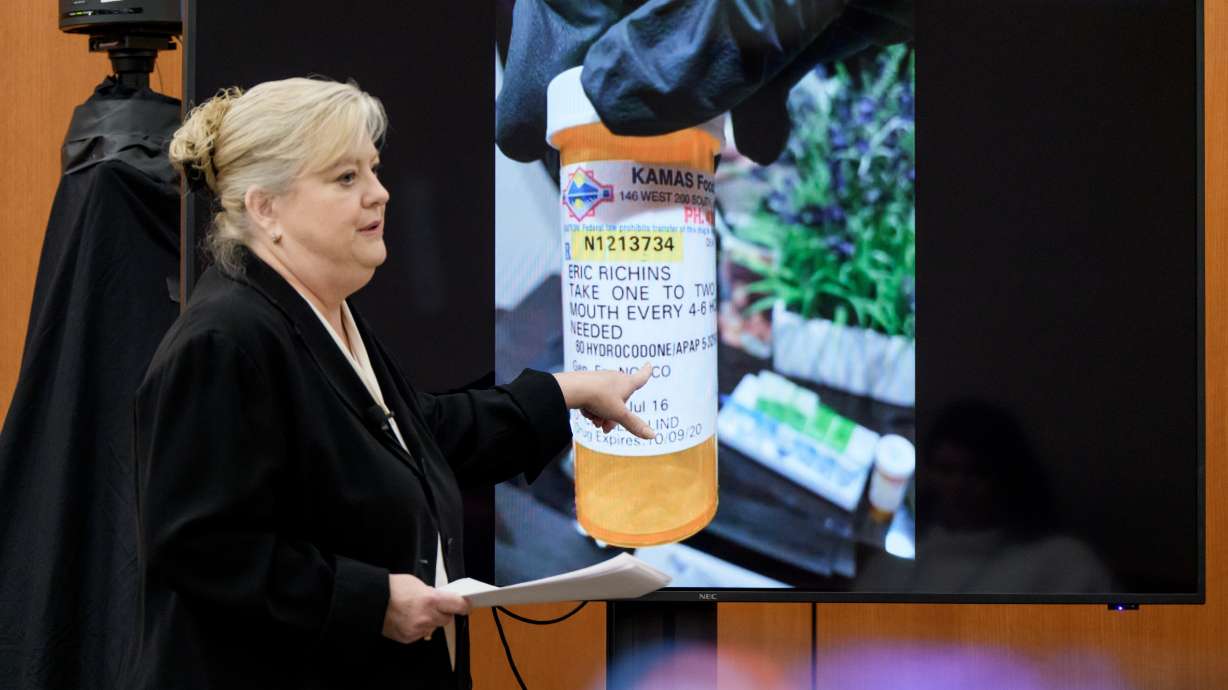
Nester also questioned whether a hydrocodone bottle recovered from the bedroom nightstand had ever been tested for fentanyl residue. It had not, as the bottle remained with the Utah Office of the Medical Examiner as part of its own investigation, Gipson confirmed. The defense further suggested it is possible for someone to store illicit drugs inside prescription pill bottles — a point Gipson acknowledged she was familiar with.
In her opening statement, Nester told the jury: "[Prosecutors are] going to spend weeks in this trial trying to convince you that Kouri had reasons to kill her husband, because they can't show you that she did kill her husband," according to KPCW.
The Witness at the Heart of the Case: Carmen Lauber and Robert Crozier
The most consequential credibility battle of Week 1 centers on Carmen Lauber — described by prosecutors as Kouri Richins' housekeeper — who is expected to testify that she sold Richins fentanyl. But that account runs directly into the testimony of Robert Crozier, the drug dealer from whom Lauber allegedly obtained the pills.
Crozier, testifying under a grant of immunity, told the court on Day 5 that he sold Lauber "M30s" and "blues" — pills he understood in early 2022 to be oxycodone, not fentanyl. He said he met Lauber at a Maverik convenience store in Draper, and that those were the only times they met. Critically, his account conflicts with Lauber's on a key detail: Crozier said he met Lauber once or twice, while Lauber had stated they met three times, according to the trial timeline.
Crozier also offered context for why he believed his pills were not fentanyl: "everybody was scared of fentanyl" in early 2022, he testified — it was hard to obtain and people were dying from it. When asked whether Lauber specifically requested fentanyl or blues, he said he could not remember the conversation, noting his memory of a 2023 interview with the Summit County Sheriff's Office was impaired because he was detoxing in Davis County Jail at the time.
Anna Isbell: The Overheard Phone Call
Another significant witness in the Saturday session, Anna Isbell, testified about overhearing a phone call Kouri Richins made on January 22, 2022 — roughly six weeks before Eric's death. Isbell said she heard Kouri ask for the "Michael Jackson drug" during that call, which Isbell interpreted as a muscle relaxer. Notably, Isbell testified that she did not hear Kouri ask specifically for fentanyl.
Isbell also disclosed that she was "livid" after a detective told her she would need to appear in court every day of the trial, following her decision to decline preparation for her testimony.
Phone Data and an Undercover Officer
On Day 5, forensic examiner Marcos Garaycochea of the Salt Lake County District Attorney's Special Investigations Unit testified that he performed phone downloads on four iPhones at the request of the Summit County Sheriff's Office, using a forensic machine to retrieve data that cannot be modified after extraction. One phone required a screen replacement before data could be pulled.
Sgt. Eric Haskell of the Salt Lake City Police Department also testified about street-level drug dealing, though Judge Mrazik ordered Court TV to stop recording during his testimony — indicating Haskell is an undercover officer. Cameras remained off until he concluded.
The Prosecution's Motive Theory
Prosecutors allege Kouri Richins poisoned her husband's Moscow Mule the night of March 3, 2022, motivated by a desire to inherit his estate — valued at more than $4 million — and pursue a relationship with another man. Chief prosecutor Brad Bloodworth told jurors during opening statements that Richins had taken out nearly $2 million in life insurance policies on Eric without his knowledge and owed hundreds of thousands of dollars in debt, according to USA Today. Bloodworth also highlighted phone searches Richins allegedly conducted while she knew she was under investigation, including queries about what poisoning looks like on a death certificate and "women, Utah, prison."
Eric Richins, for his part, had met with a divorce attorney before his death.
Kouri Richins has pleaded not guilty to all charges, which include aggravated murder, attempted aggravated murder, insurance fraud, and forgery. She faces 25 years to life in prison if convicted on the murder charge alone. She has been held in Summit County Jail without bail since her arrest in May 2023.
What to Watch When Trial Resumes
When court reconvenes Monday, Judge Mrazik has indicated he may provide more detail on the denied mistrial motion and his reasoning for rejecting it. Jurors can also expect to hear more from prosecution witnesses building the chain of drug acquisition — including, eventually, Carmen Lauber's direct testimony about what she says she sold Kouri Richins. How prosecutors reconcile Lauber's account with Crozier's contradictory recollection is likely to be a defining challenge of Week 2. The trial is scheduled to run through March 27.