

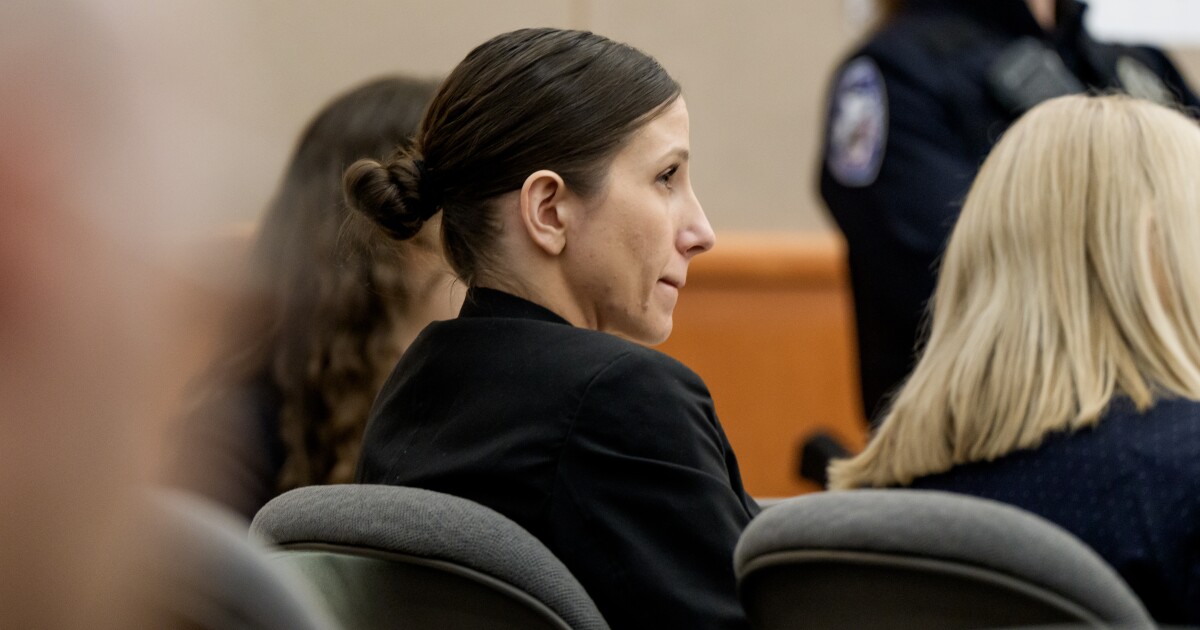
In one of the most significant — and unexpected — turns of the Kouri Richins murder trial, her defense team rested its case Thursday without calling a single witness, and Richins herself formally waived her right to testify. The move, which came just minutes after the prosecution concluded its own case, sets the stage for closing arguments this coming Monday, March 16.
A Surprising Decision to Stay Silent
The defense had previously indicated it planned to call approximately three witnesses when its case-in-chief began, according to reporting by East Idaho News and Idaho News. Witnesses were reportedly waiting at the courthouse to testify. But after a roughly 90-minute lunch recess in which attorneys conferred privately with their client, defense attorney Wendy Lewis returned to the courtroom and made a brief announcement.
"After consulting with our client, the defense rests," Lewis told Judge Richard Mrazik, according to East Idaho News live updates from the courtroom.
Richins, 35, formally waived her right to testify, meaning the jury will not hear directly from the woman accused of poisoning her husband Eric Richins with a lethal dose of fentanyl in March 2022. The state confirmed it would not present a rebuttal case. The jury was dismissed and instructed not to return until Monday morning at 8:30 a.m.
The only witness technically affiliated with the defense who testified during the trial was Ali Staking — described as Kouri's childhood friend — who took the stand during the state's case due to travel difficulties. No witness was called during the defense's formal case-in-chief, Fox 13 reported.
Prosecution Wraps Up 2.5 Weeks of Testimony
Before the defense made its dramatic announcement, the prosecution formally rested its case at approximately 11:33 a.m., following the conclusion of testimony from lead investigator Detective Jeff O'Driscoll of the Summit County Sheriff's Office. According to East Idaho News, the state called a total of 42 witnesses over roughly two and a half weeks of testimony.
O'Driscoll's final moments on the stand included redirect examination from prosecutor Brad Bloodworth, who confirmed details about an empty hydrocodone bottle collected at the scene and asked whether detectives had ever given key witness Carmen Lauber — the former Richins housekeeper who allegedly obtained drugs for Kouri — a ride anywhere other than to court. O'Driscoll said no. Bloodworth also confirmed that a Kevin Spacey GIF found on Richins' phone was from the television show "House of Cards," East Idaho News reported.
Earlier in the morning, defense attorney Kathryn Nester pressed O'Driscoll on investigative gaps, including whether detectives tracked Eric Richins' phone movements during a trip to Mexico, whether they interviewed Kouri's family members about internet searches found on her devices, and whether Eric had sought medical treatment after a Valentine's Day 2022 incident. O'Driscoll acknowledged limitations in several of those areas, according to East Idaho News updates.
Defense Motion for Directed Verdict Denied
Following the state's rest, defense attorney Alexander Ramos filed a Rule 17 motion arguing that prosecutors had failed to prove each of the five counts against Richins and requesting a directed verdict of acquittal. Ramos argued, among other things, that the state had provided minimal evidence that Kouri knowingly purchased fentanyl or administered it to Eric, and pointed to what he characterized as conflicting testimony between two drug-related witnesses — Lauber, who said Kouri asked for and approved fentanyl, and another witness, Crozier, who testified he did not sell fentanyl in early 2022, according to East Idaho News.
On the insurance fraud and forgery counts, Ramos argued prosecutors had not proven Kouri signed Eric's name on insurance documents without his knowledge or permission. Judge Mrazik asked prosecutor Bloodworth specifically to address what the defense called a "lack of believable evidence regarding intent to defraud." Bloodworth pointed to a $100,000 TruStage life insurance policy, arguing that nothing on the application indicated Eric was aware of it and that all correspondence routed back to Kouri's address, according to East Idaho News.
Judge Mrazik ultimately denied the motion, stating from the bench: "The court is not free to weigh the evidence and thus invade the province of the jury, whose prerogative it is to judge the facts." Mrazik said that if there is any evidence of guilt, "however slight," he is obligated to submit the case to the jury, East Idaho News reported.
Children's Book Authorship Challenged
Among the final pieces of evidence introduced by the prosecution before it rested, jurors were shown text messages that undercut Kouri Richins' public claims that she personally wrote the children's book "Are You with Me?" — which was published months after Eric's death and marketed as helping children cope with grief. According to Court TV, texts between Kouri and her brother DJ reveal she hired a ghostwriter, paying $2,500 for the children's book while discussing plans for a larger, more expensive manuscript.
"The kids book wasn't bad at all assuming everything turns out the way its supposed to cost $2500," Richins wrote to family, according to Court TV. "The bigger book (yes we have to change names) I also want to talk to my attorney about other precautions to take to avoid a lawsuit from them for defamation."
In another text, Court TV reported, Richins estimated she would earn $5.35 per book sold on Amazon. Prosecutors also showed jurors handwritten notes found in an orange notebook on Richins' nightstand, in which she described the morning she found Eric unresponsive, as well as portions of a letter written while she was in jail — referred to as the "Walk the Dog" letter — which prosecutors have argued was intended to encourage family members to provide false testimony.
A Blocked Defense Strategy
Thursday's proceedings also revealed a last-ditch effort by the defense to introduce testimony related to a man named David Norris, who reportedly contacted the Summit County Sheriff's Office claiming Eric Richins had approached him seeking fentanyl in 2019. Judge Mrazik had previously denied a motion to admit Norris' statement, ruling that the residual hearsay exception was not met, according to East Idaho News. Defense attorney Nester attempted to find alternative ways to introduce the substance of that claim through O'Driscoll's cross-examination, but the judge blocked those questions as well, ruling there was a lack of foundation.
Prosecutors warned the court that if any Norris-related information was admitted, they would seek to introduce additional witnesses — including a recording that allegedly captured a statement about Carmen Lauber selling street drugs, East Idaho News reported.
What Comes Next
With both sides having rested, attorneys for the prosecution and defense were scheduled to meet with Judge Mrazik Friday at 1 p.m. to finalize jury instructions ahead of Monday's closing arguments, according to East Idaho News. A conference call on the same topic was also scheduled for Thursday afternoon.
Richins faces five felony counts: aggravated murder, attempted aggravated murder, two counts of filing a false or fraudulent insurance claim, and forgery. Closing arguments from both sides are scheduled for Monday, March 16, after which the jury is expected to begin deliberations. The decision not to call any defense witnesses — and Richins' choice to remain silent — will likely factor heavily into how both sides frame their closing arguments to the jury.