

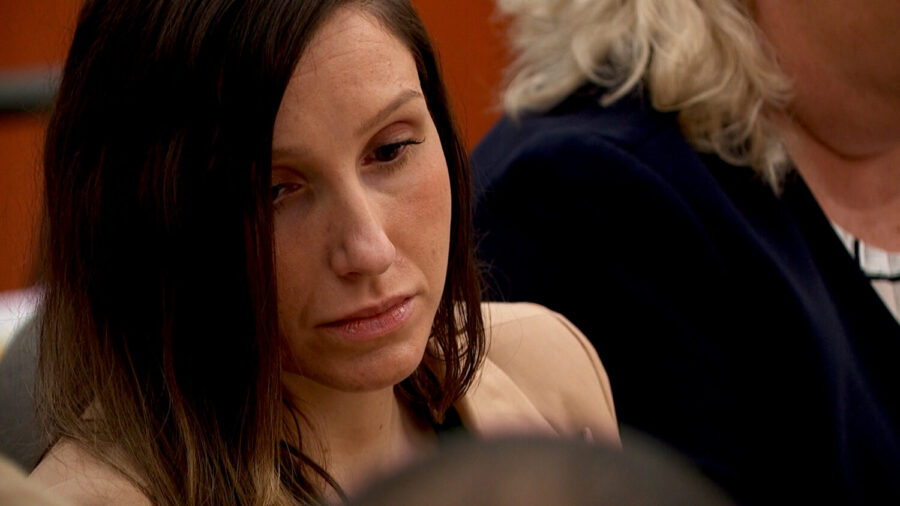
A Utah jury delivered a swift and unanimous verdict Monday evening, finding Kouri Richins guilty on all five counts — including aggravated murder — in the 2022 fentanyl poisoning death of her husband, Eric Richins. The panel deliberated for approximately three hours before announcing the verdict at 6:20 p.m. MDT in Summit County's Third District Court in Park City, according to multiple outlets including the Associated Press and NBC News.
Richins, 35, lowered her head and remained still as Judge Richard Mrazik read each guilty verdict aloud. She now faces a maximum sentence of life in prison without parole on the aggravated murder count, while the murder charge itself carries a term of 25 years to life. Sentencing has been scheduled for May 13, 2026 at 11:30 a.m.
The Verdict
The jury found Richins guilty on all five felony counts: aggravated murder, attempted aggravated murder, two counts of insurance fraud, and forgery, according to CBS News and NewsNation. The verdict came at the end of a trial that spanned 15 court days over approximately three weeks — a proceeding that was expected to last five weeks but was cut short after the defense abruptly rested without calling a single witness and Richins waived her right to testify.
Utah juries consist of eight jurors, according to Judge Mrazik's instructions. The deliberating panel was composed of six men and two women. Four alternates — all women — were excused before deliberations began but were told their service was not yet complete in case they needed to be recalled.
The Case Against Richins
Prosecutors argued throughout the trial that Richins poisoned her husband by spiking a Moscow Mule cocktail with illicit fentanyl at their home outside Park City on the night of March 3-4, 2022. A medical examiner determined Eric Richins, 39, had approximately five times the lethal dose of fentanyl in his system when he died, and that the drug was illicit — not medical grade — and had been orally ingested, according to CBS News and the AP.
Summit County Chief Prosecutor Brad Bloodworth told jurors during closing arguments Monday that Richins had the means, motive, and opportunity to commit the crime. He argued she was nearly $8 million in debt, was conducting an extramarital affair with a man named Robert Josh Grossman, and believed — incorrectly, as it turned out — that she would inherit her husband's estate upon his death.
"She wanted to leave Eric Richins but did not want to leave his money," Bloodworth told the jury, according to the AP and KUTV.
Prosecutors alleged Richins sought out fentanyl by asking two people for what she called "the Michael Jackson drug," a reference to the drug combination that killed the pop star. "She knows she wants it because it is lethal, it is fatal, it kills," Bloodworth said during closing arguments, as reported by ABC News.
The attempted aggravated murder charge stemmed from a Valentine's Day 2022 incident in which prosecutors alleged Richins gave her husband a fentanyl-laced sandwich that caused him to break out in hives and black out — a failed first attempt to kill him weeks before his death, according to CBS News.
Key evidence presented by the prosecution included: testimony from Carmen Lauber, a housekeeper who said she sold Richins fentanyl pills on multiple occasions in early 2022; internet searches recovered from Richins' phone including "what is a lethal dose of fentanyl" and "if someone is poisoned what does it go down on the death certificate as," as reported by the AP; text messages between Richins and her boyfriend expressing a desire for Eric to "go away"; a letter found in Richins' jail cell that prosecutors said was written to coach her brother into providing false testimony about Eric having obtained fentanyl in Mexico; and evidence that Richins deleted communications with Lauber and others after her husband's death.
Bloodworth addressed the circumstantial nature of much of the evidence directly in his rebuttal closing argument. "People do not video themselves poisoning their spouse," he said. "But circumstantial evidence is just as good as direct evidence," according to East Idaho News live updates from the courtroom.
The Defense's Final Arguments
Defense attorney Wendy Lewis delivered an impassioned closing argument urging jurors to acquit, centering her presentation on the theme of confirmation bias. She argued investigators had worked backward from a predetermined conclusion rather than following the evidence objectively. "Instead of looking at the evidence to determine what happened, the state has determined what happened, and then they found the evidence to support it," Lewis said, according to ABC News.
Lewis targeted Lauber's credibility extensively, arguing the housekeeper — who testified under multiple grants of immunity — could not be trusted and that detectives had essentially fed her the narrative about fentanyl. "She took that story and she ran with it because she had everything to lose," Lewis told jurors, as reported by ABC News.
The defense also argued there was no physical evidence that fentanyl had been placed in Eric Richins' drink, that investigators failed to pursue alternative explanations including a recent trip Eric took to Mexico, and that Richins was being unfairly judged for how she grieved. "There is no wrong way to grieve," Lewis told the jury, according to KUTV.
Lewis concluded her argument with a direct appeal: "Be courageous. Courage is what this moment demands. The courage to stand between a member of this community and the state. Do not let them fool you. Do not fall for red herrings. Kouri Richins did not kill Eric Richins. The state did not prove this case beyond a reasonable doubt."
Before the defense delivered its closing, attorney Kathryn Nester moved for a mistrial, alleging Bloodworth had dehumanized Richins by calling her a "black widow," speculated about her state of mind without evidentiary support, and improperly commented on her courtroom demeanor. Judge Mrazik denied the motion, though he agreed to issue a curative instruction telling jurors they could consider their own observations of Richins' demeanor but not Bloodworth's characterizations of it, according to KUTV and NewsNation.
Defense Attorneys Maintain Innocence After Verdict
Following the verdict, Richins' three attorneys — Wendy Lewis, Kathy Nester, and Alex Ramos — released a written statement maintaining their client's innocence and expressing disappointment in the outcome.
"For nearly three years, the public has heard accusations about Kouri. Those accusations created a narrative that spread far beyond this courtroom. But in court, accusations are not enough. The law requires proof. ... Kouri has maintained her innocence from the very beginning. ... Kouri should finally be able to go home to her three young boys and begin rebuilding her life."
Background
Richins was arrested in May 2023, more than a year after Eric Richins died. Her case drew widespread national attention in part because, in the months between her husband's death and her arrest, she had self-published a children's picture book called "Are You with Me?" — ostensibly to help her three young sons cope with grief — and appeared on local Utah television to promote it, according to NBC News. During that appearance, she described her husband's passing as unexpected and said it "completely took us all by shock," as reported by ABC News. Investigators later determined she had paid a ghostwriting company to write the book.
The prosecution called more than 40 witnesses over 13 days of testimony, according to CNN. The defense called none.
What to Watch Next
Sentencing is scheduled for May 13, 2026 at 11:30 a.m. before Judge Mrazik. On the aggravated murder conviction alone, Richins faces a mandatory minimum of 25 years and a maximum of life without parole. Her defense team's post-verdict statement suggesting she should "go home to her three young boys" signals the attorneys may pursue appeals. Watch for any post-trial motions from the defense in the weeks ahead, as well as victim impact statements and sentencing arguments that will shape whether Richins receives the maximum penalty when she returns to court in May.