

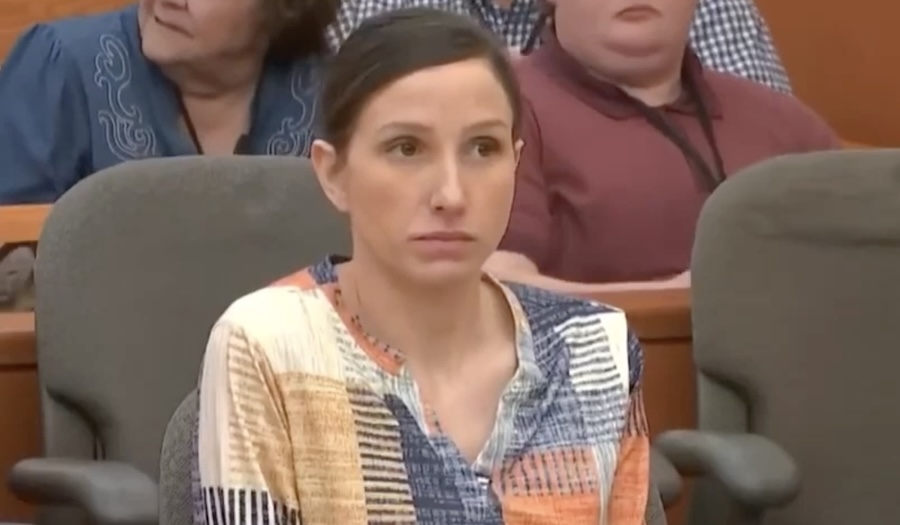
The Kouri Richins murder trial held a rare Saturday court session on February 28, producing significant clarifications to witness testimony that could prove pivotal in the weeks ahead — including new details about what a key witness actually heard on a critical phone call, and confirmation that a mistrial motion was filed and denied during Week 1.
Mistrial Motion Revealed — and Denied
Judge Richard Mrazik briefly disclosed at the close of Day 5 on Friday that a mistrial motion had been filed at some point during the first week of proceedings. The identity of the filing party has not been made public, and the judge declined to elaborate immediately, indicating he may address the motion and his reasoning in greater detail when the trial resumes on March 2. The disclosure adds an additional layer of legal tension to an already closely watched proceeding.
What Anna Isbell Actually Heard
One of the more significant clarifications to emerge from the Saturday session involved witness Anna Isbell, whose testimony had previously drawn attention. According to reporting on her full account, Isbell told the court that she overheard a phone call Kouri Richins made on January 22, 2022 — and that during the call, Richins asked for the "Michael Jackson drug." Critically, Isbell said she interpreted that to mean a muscle relaxer. She did not hear Richins ask for fentanyl.
The "Michael Jackson drug" reference is widely understood to refer to propofol, the anesthetic linked to the pop star's 2009 death — not fentanyl. The distinction matters because prosecutors are trying to establish that Richins was actively seeking a powerful sedative in the weeks before her husband Eric Richins died on March 4, 2022. Isbell's clarification complicates that narrative, as she is a prosecution witness whose recollection does not directly tie Richins to a fentanyl request.
Isbell also reportedly expressed frustration over her involvement in the proceedings. She was described as "livid" after a detective informed her she would be required to appear in court every day of the trial — this after she had declined to be prepped for her testimony.
Robert Crozier's Testimony Finalized
The Saturday session also confirmed that the testimony of Robert Crozier — the drug dealer who took the stand on Day 5 under a grant of immunity — is now complete. Crozier's account stands as a direct challenge to the prosecution's central drug supply chain theory.
According to his testimony, Crozier said he sold Carmen Lauber — the Richins family's housekeeper and a key prosecution witness — pills he described as "M30s" and "blues," which he understood at the time to be oxycodone, not fentanyl. Crozier testified that he met Lauber at a Maverik convenience store in Draper, Utah, and that they met only once or twice — not three times as Lauber had stated on the stand.
Crozier offered a notable explanation for why he believed the pills were not fentanyl: he said that in early 2022, "everybody was scared of fentanyl" because it was hard to obtain and people were dying from it. His testimony, if credited by the jury, directly undercuts Lauber's claim that she procured fentanyl pills from Crozier and subsequently sold them to Richins.
Crozier had previously acknowledged during Day 5 testimony that he did not recall much of a 2023 interview with the Summit County Sheriff's Office, attributing his poor memory to the fact that he was detoxing in Davis County Jail at the time. He also said he could not remember whether Lauber specifically requested blues or fentanyl during their transactions.
Phone Forensics and an Undercover Officer
The Saturday session followed Day 5 testimony that also included Marcos Garaycochea of the Salt Lake County District Attorney's Special Investigations Unit, who testified about performing forensic phone downloads on four iPhones connected to the case. He described using a forensic machine to extract data in a way that cannot be modified or deleted after retrieval, and noted that one phone required a screen replacement before data could be accessed.
Also on Day 5, Sgt. Eric Haskell of the Salt Lake City Police Department testified about street-level drug dealing. Judge Mrazik ordered Court TV to stop recording during Haskell's testimony, indicating he is an undercover officer. Cameras remained off for the duration of his time on the stand.
The Central Credibility Battle
As Week 1 concludes, the fundamental conflict at the heart of this trial has come into sharper focus. Carmen Lauber — who has been granted immunity — testified that she obtained fentanyl from Crozier and sold it to Richins on multiple occasions. Crozier, also testifying under immunity, says he sold oxycodone, not fentanyl, and met Lauber fewer times than she claims. Anna Isbell, meanwhile, did not hear Richins ask for fentanyl — only for an unspecified powerful drug.
Defense attorneys have argued throughout that Lauber lacks credibility and was motivated to cooperate with prosecutors in exchange for legal protection. No fentanyl was ever found in the Richins home.
For their part, prosecutors contend that Eric Richins, 39, died on March 4, 2022, with five times the lethal dose of fentanyl in his system, and that the drug was orally ingested. They allege Kouri Richins, 35, slipped it into a Moscow mule cocktail she prepared for him that night. Richins has pleaded not guilty to aggravated murder and nearly three dozen related charges, including attempted murder for an alleged earlier poisoning on Valentine's Day 2022.
What to Watch Next
Week 2 of the trial is scheduled to begin Monday, March 2, at 8:30 a.m. Judge Mrazik has indicated he may provide additional detail about the denied mistrial motion at that time. With the drug supply chain testimony now complete, prosecutors are expected to continue building their case through financial records, digital evidence, and additional witnesses. The defense will have an opportunity to continue pressing the credibility of Carmen Lauber and the gaps in the investigation. The trial is scheduled to run through late March.