

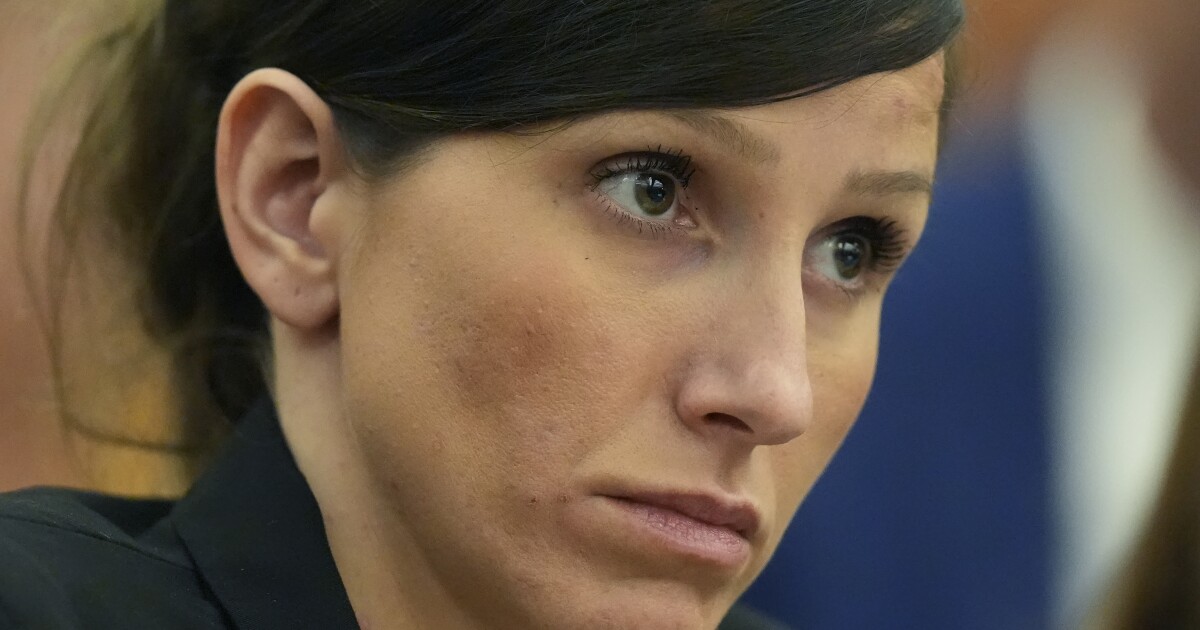
Opening statements in the murder trial of Kouri Richins delivered a stark contrast Monday in Park City, Utah, as prosecutors portrayed a debt-ridden real estate agent who poisoned her husband for millions while defense attorneys argued the state cannot prove how fentanyl entered Eric Richins' body — or that Kouri put it there at all.
The State's Case: Money, Motive, and a 'Facade of Privilege'
Summit County Deputy Attorney Brad Bloodworth opened for the prosecution by telling jurors that Kouri Richins, 35, murdered her 39-year-old husband Eric on the night of March 3–4, 2022, slipping a lethal dose of fentanyl into a Moscow mule cocktail she prepared for him at their Kamas home. According to Bloodworth, Eric Richins had approximately seven times the lethal dose of fentanyl in his blood and stomach — a level the prosecutor called "intentional, not accidental."
The financial motive, Bloodworth argued, was overwhelming. On the day Eric Richins died, his estate was worth over $4 million while Kouri owed more than $4.5 million to over 20 different lenders through her struggling real estate business, K. Richins Realty LLC. She was simultaneously scheduled to close on an unfinished Midway mansion that would add another $3.2 million in debt. A prenuptial agreement, Bloodworth noted, would have blocked her from inheriting Eric's assets through divorce — but not through his death.
"The evidence will prove that Kouri Richins murdered Eric for his money, and for a fresh start at life," Bloodworth told the jury, according to the Salt Lake Tribune. "More than anything, she wanted his money to perpetuate her facade of privilege, affluence and success."
Prosecutors alleged the fatal poisoning was not the first attempt. On Valentine's Day 2022, Bloodworth said, Kouri left Eric a sandwich from a local diner before driving an hour away to meet her boyfriend. Eric later told two friends he broke out in hives, used his son's EpiPen, and said, "I think my wife tried to poison me," according to charging documents. Prosecutors allege Kouri had obtained fentanyl pills from the family's housekeeper, Carmen Lauber, days earlier — and that after the Valentine's Day attempt failed, she asked Lauber for something "stronger."
Bloodworth also highlighted Kouri's behavior in the aftermath of her husband's death, including text messages to her boyfriend — identified as Josh Grossman — sent hours before Eric died saying "Love you," and messages sent days after saying she wanted him "every day." Five months before Eric's death, she had booked an all-inclusive Caribbean resort vacation for herself and Grossman, scheduled to begin the month after her husband died, according to the prosecution.
Perhaps most striking to jurors, Bloodworth said that as paramedics wheeled Eric's body out of the home that morning, three GIFs were accessed on Kouri's phone: one showing a figure wiping tears with dollar bills, one featuring actor Kevin Spacey with the caption "Idiots. Idiots everywhere," and a third of Donald Trump saying, "I'm really rich."
In the weeks and months following Eric's death, Kouri's phone allegedly recorded internet searches including "Can cops uncover deleted messages iPhone?" and "How to completely wipe an iPhone clear remotely," as well as searches for luxury prisons and whether police can compel lie detector tests, according to Bloodworth.
Defense: 'Zero Evidence' of How Fentanyl Got Into Eric Richins
Defense attorney Kathy Nester opened by playing Kouri's tearful 911 call in full. "Those were the sounds of a wife becoming a widow," she told jurors, according to ABC News. Nester argued the prosecution's case is built on financial motive and circumstantial behavior — but fundamentally cannot answer the central question: how did fentanyl get into Eric Richins?
"What you will never hear, after four years of investigation, is how that fentanyl got inside of him, because there is zero evidence of that," Nester said, according to the Salt Lake Tribune. She noted that Eric's death certificate still lists the manner of death as "unknown."
Nester acknowledged that Kouri sought to purchase pain pills through housekeeper Carmen Lauber, but said Eric had asked her to do so to manage chronic back and knee pain from his stone masonry work. Critically, she argued that the drug dealer Lauber used sold oxycodone — not fentanyl — and that no oxycodone was found in Eric's system at autopsy. "The fentanyl had to come from somewhere else," Nester said, pointing to Eric's recent trip to Mexico, marijuana gummies found in the home, a 2016 hydrocodone prescription bottle found in his nightstand, and the defense's contention that illicit fentanyl can be unknowingly present in street drugs.
Nester also pushed back on the financial motive, arguing Kouri knew before Eric died that his assets were protected in a trust controlled by his sister Katie Richins-Benson — meaning the money would not simply flow to Kouri. She told jurors that Eric's family hired a private investigator for $100,000, paid for with trust funds meant for the couple's three sons, and that the investigator fed information directly to Summit County sheriff's investigators.
On the $100,000 life insurance policy prosecutors allege Kouri fraudulently obtained with Eric's forged signature, Nester was dismissive. "Wives everywhere sign their husbands' names on a lot of things," she said, according to ABC News, arguing the policy came from a credit union mailer.
Family Witnesses Take the Stand
Prosecutors called four witnesses on Day 1. Eric's father, Eugene Richins, testified about his son's character and described receiving a call from Kouri saying the medical examiner had determined Eric died from the same lung fungus that killed Eric's mother — a claim that proved false when Katie Richins-Benson contacted the medical examiner's office and was told no results had been released and Kouri had never called, according to East Idaho News.
Eric's sister, Katie Richins-Benson, broke down repeatedly on the stand. She testified she was "dumbfounded" on the morning of Eric's death when Kouri — while consoling one of her sons — spoke matter-of-factly with a family associate about closing on the Midway mansion deal, according to CNN. "You can't tell me you're going to close on that Midway mansion when my brother just died," Richins-Benson said she told Kouri. Kouri's reply, she testified: "Yeah, absolutely. He has nothing to do with it. The money's already gone through. I'm going to." Kouri also said that morning she intended to sell the family home, Richins-Benson added. "I had just lost one of the most important people in my entire life, and she was planning on selling the house that he had just been wheeled out of."
Clint Benson, Katie's husband, testified about changing the locks on the Richins home after Eric's death, installing security cameras, and serving as an intermediary between Eric and a divorce attorney Eric had secretly consulted — hiding the communications because, Benson said, Eric believed Kouri was monitoring his emails.
Summit County Sheriff's Office Patrol Deputy Vincent Nguyen, the fourth witness, testified about arriving at the Richins home around 3:40 a.m. on March 4, 2022. Jurors watched about 30 minutes of his body camera footage, which captured Kouri crying and speaking with first responders as family members arrived. Under cross-examination by defense attorney Alex Ramos, Nguyen acknowledged he never directed anyone to search the kitchen or test the copper Moscow mule mugs — which Kouri's nanny put in the dishwasher the next day — and that he himself did not search the kitchen.
The Scene Outside the Courtroom
The trial has drawn extraordinary public and media attention. According to the Salt Lake Tribune, spectators began lining up outside the 3rd District Courthouse in Park City as early as 4:30 a.m., with all 24 public gallery wristbands distributed by roughly 7:15 a.m. More than 20 news outlets, several podcasters, and at least one documentary production company are covering proceedings, according to Utah State Courts spokesperson Tania Mashburn. The trial is being livestreamed by multiple outlets including Court TV.
Judge Richard E. Mrazik addressed a media restriction controversy early Monday, agreeing to amend an earlier order that had banned recording and photography in areas outside the courthouse normally considered public. The Salt Lake Tribune had sent a letter to the judge Friday calling the restriction "unprecedented."
What to Watch For
Today's source articles cover Day 1 of the trial — opening statements and initial witness testimony from Eric's family. As previously reported, Week 1 proceeded through a special Saturday session on February 28, with key testimony from housekeeper Carmen Lauber and drug dealer Robert Crozier creating a significant credibility conflict at the heart of the prosecution's case. A mistrial motion was filed during Week 1 — by an unidentified party — and denied by Judge Mrazik, who indicated he may elaborate on his ruling when trial resumes. Week 2 begins Monday, March 2, at 8:30 a.m., with the forensic phone evidence, additional law enforcement testimony, and the ongoing credibility battle over the fentanyl supply chain all expected to dominate proceedings.