

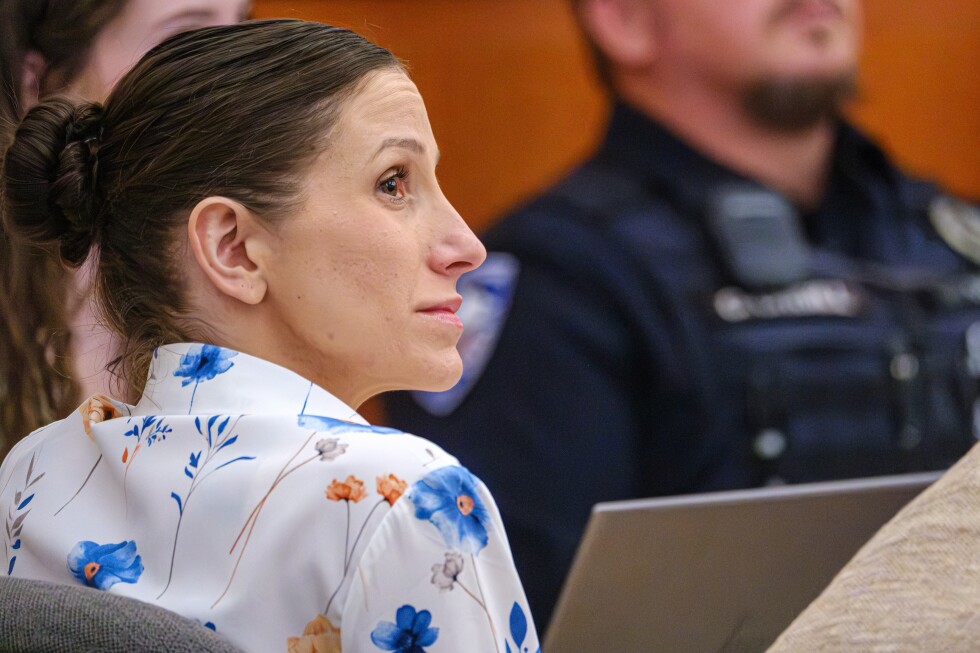
With Week 1 of the Kouri Richins murder trial now complete — capped by a special Saturday session, a denied mistrial motion, and a credibility clash between two central drug witnesses — attention turns to what prosecutors and defense attorneys must prove when court resumes on March 2. Today's coverage offers a comprehensive look at the evidence and timeline that will define the weeks ahead in Summit County's 3rd District Court.
The Case at a Glance
Kouri Richins, 35, a Kamas-area mother and former real estate agent, stands accused of fatally poisoning her husband Eric Richins with what prosecutors allege was five times the lethal dose of fentanyl in the early morning hours of March 4, 2022. Eric Richins, 39, was found unresponsive in the couple's bedroom. Richins called 911 at 3:21 a.m., and first responders noted it appeared he had been "dead a while," according to court documents cited by CNN. He was pronounced dead at 4:58 a.m. She has pleaded not guilty to five felony charges: aggravated murder, attempted aggravated murder, two counts of insurance fraud, and one count of forgery, according to the Salt Lake Tribune.
After her husband's death, Richins wrote and published a children's grief book titled Are You with Me?, which she later promoted on a local television segment. The book's juxtaposition with the murder accusations has drawn national attention to the case.
What Prosecutors Allege
According to charging documents outlined by CNN and the Salt Lake Tribune, prosecutors have constructed a detailed timeline stretching back nearly two years before Eric Richins' death. In October 2020, Eric met with an estate planning lawyer expressing a desire to protect himself from what he described as "recently discovered and ongoing abuse and misuse of his finances" by his wife. By November 2020, he had removed Kouri Richins as the beneficiary of a $500,000 life insurance policy and transferred his home and business interests to a trust managed by his sister — a fact Kouri allegedly did not learn until after his death.
Prosecutors allege that by December 2021, Richins told a friend she felt "stuck" and "trapped" in her marriage and that it "would be better" if Eric died. Weeks later, on January 29, 2022, she allegedly applied for a new life insurance policy on Eric's life, naming herself as the beneficiary — a policy prosecutors contend bears Eric's forged signature.
The prosecution's central drug narrative centers on a housecleaner — identified in trial testimony as Carmen Lauber — who prosecutors say purchased pills for Richins on February 11, 2022, and again on February 26, 2022, after Richins allegedly said the first batch was "not strong enough." CNN reports that Lauber told authorities Richins had asked for "some of the Michael Jackson stuff" — a reference that became contested testimony during Week 1, when witness Anna Isbell testified she overheard a January 2022 phone call in which Richins asked for the "Michael Jackson drug," though Isbell said she believed that referred to a muscle relaxer and did not hear Richins ask for fentanyl specifically, according to KPCW.
On Valentine's Day 2022 — between the two alleged drug purchases — Eric Richins told two friends he believed his wife had poisoned him after eating a sandwich she had left him. He broke out in hives, used an EpiPen, and drank a bottle of Benadryl, telling one friend, "You almost lost me," according to CNN. Eric did not have food allergies, but prosecutors note fentanyl can cause pseudoallergic reactions. This alleged February 14 incident forms the basis of the attempted aggravated murder charge.
Within a week of the second alleged drug purchase, Eric Richins was dead. At the time of his death, prosecutors say, his estate was worth roughly $5 million while his wife was "spiraling toward total financial collapse," according to CNN.
The Defense's Central Argument
The defense's most powerful weapon so far has been the testimony of Robert Crozier, the drug dealer who allegedly sold pills to Lauber. As KPCW reported from Day 5, Crozier testified under immunity that he sold Lauber "M30s" and "blues" which he understood to be oxycodone — not fentanyl — in early 2022. His Saturday session testimony added further context: he said he knew his pills were not fentanyl because "everybody was scared of fentanyl" at that time, describing it as hard to obtain and associated with deaths, according to KPCW.
Crozier's testimony directly contradicts Lauber's account, which forms the backbone of the prosecution's drug-chain narrative. Defense attorneys had previewed this conflict before trial, writing in a motion that the dealer's account "doesn't just poke holes in their case, it throws a grenade in the middle of it," according to CNN. Prosecutors have countered that even if jurors credit Crozier's account, they could "still easily convict the Defendant," CNN reported.
The defense has also challenged the phone forensic evidence, with attorneys previously arguing that internet searches on Richins' phone were a reaction to the investigation rather than evidence of guilt, according to CNN.
The Mistrial Motion and What's Ahead
Adding intrigue to the proceedings, Judge Mrazik briefly disclosed at the end of Day 5 that a mistrial motion had been filed and denied during Week 1, according to KPCW. The identity of who filed the motion — prosecution or defense — has not been disclosed, and the judge indicated he may elaborate when court resumes.
The trial, scheduled to run through March 27, 2026, now enters Week 2 on March 2. Jurors will be weighing not only the credibility battle between Lauber and Crozier but also a dense body of circumstantial evidence including phone forensics, financial records, and a trail of internet searches that prosecutors say reveal a woman who feared being caught — and that the defense contends reflects nothing more than a grieving widow caught up in a terrifying investigation.
Key questions heading into Week 2 include whether prosecutors will call Carmen Lauber back to the stand for further examination, what the judge will reveal about the mistrial motion, and how the defense plans to counter the prosecution's financial motive evidence.