

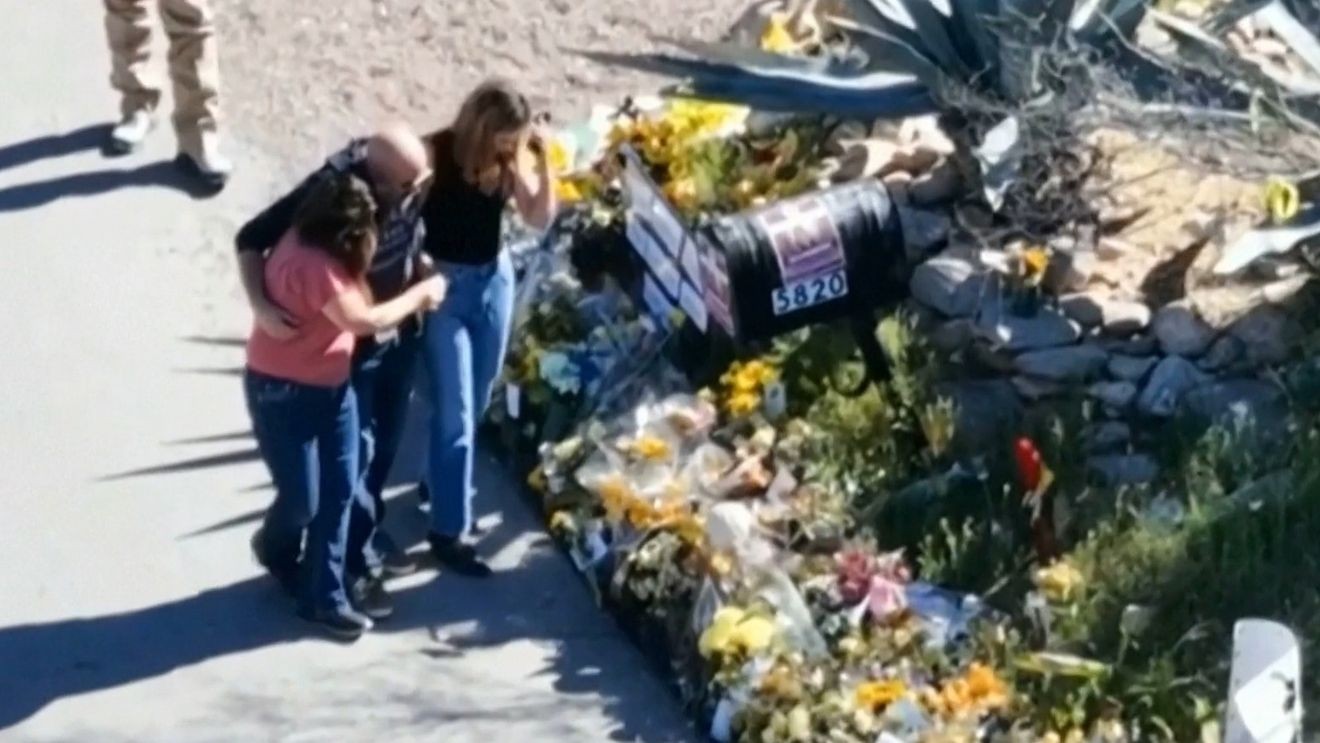
As the disappearance of Nancy Guthrie enters its 38th day with no arrest and no confirmed suspect, two former FBI special agents have stepped forward with the most comprehensive public breakdown yet of where the investigation may be headed — while the Pima County Sheriff's Office scrambled to do damage control over its embattled leader's employment history.
Former FBI Agents Lay Out Six Theories
In a joint interview with the Daily Mail, former FBI Special Agents Jennifer Coffindaffer and Jason Pack analyzed six leading theories in the case of the 84-year-old mother of TODAY co-anchor Savannah Guthrie, who was abducted from her Tucson, Arizona home in the early hours of February 1, 2026.
Coffindaffer was unambiguous about where her suspicion lies. "My number one theory is that people with some tangential connection to the household exposed insider knowledge to criminals," she told the Daily Mail. According to the outlet, police are believed to have already interviewed several individuals who had contact with Nancy in the weeks before her disappearance — though no major developments in that line of inquiry have been reported.
Coffindaffer also introduced a new angle that has not previously been articulated publicly: the possibility that an obsessed fan of Savannah Guthrie may have targeted her mother. She pointed to Savannah's 2024 book Mostly What God Does, in which the anchor mentions a kidnapping game she and her cousins played as children. "Did some attention-craving stalker read her book and stage this as a way to get Savannah's attention?" Coffindaffer asked. Detectives have reportedly reviewed correspondence sent to Savannah and investigated prior threats, according to the Daily Mail, but no suspect matching a stalker profile has emerged.
Ransom Notes May Have Been 'Misdirection'
Pack offered a striking reassessment of the ransom notes that were sent to media outlets early in the investigation. Rather than viewing them as a genuine demand for payment, Pack told the Daily Mail that the notes "may have been intended to mislead investigators rather than to get paid" and that the perpetrators may have had "other intentions entirely."
Coffindaffer offered a complementary theory: that the kidnappers may have initially planned a ransom scheme, but that something went wrong during the abduction — possibly Nancy's death — causing them to abandon the plan entirely.
On the question of a burglary gone wrong, Pack expressed skepticism, pointing to the firearm visible in the doorbell camera footage captured at 1:47 a.m. on the night of the disappearance. "Burglars want to get in, get the stuff, and get out. This maybe suggests that they were prepared to encounter someone," he said.
The remaining theories examined by the two agents included a professional hit, cartel or organized crime involvement, and a random opportunistic crime. Coffindaffer noted that cartel kidnappings typically involve retaliation, debts, or disputes within criminal networks — none of which have surfaced in this case, according to the Daily Mail.
Wi-Fi Jammer Theory Faces Scrutiny
Investigators have been canvassing Nancy Guthrie's Tucson neighborhood in recent days asking residents about a reported internet outage around the time of the abduction, with multiple homeowners confirming the line of questioning to the Daily Mail. The theory holds that someone deliberately disrupted local wireless connectivity to disable Ring cameras and smart doorbells before carrying out the crime.
Pack pushed back on the feasibility of that scenario. "A radio frequency jammer capable of knocking out wireless networks across a neighborhood footprint is not a consumer product. It is military or law-enforcement equipment," he told the Daily Mail, adding: "It is not something you order online and drop in a backpack." He acknowledged that smaller jammers exist on gray-market and overseas sites, but said they are low-powered and limited in range.
Sheriff's Office Acknowledges Résumé Errors — But Stays Silent on Discipline
The Pima County Sheriff's Department issued a formal statement on Tuesday acknowledging "two clerical errors" in Sheriff Chris Nanos' publicly posted résumé, one day after the Arizona Republic published an investigation revealing significant discrepancies in his employment history.
PCSD spokesperson Angelica Carrillo confirmed that Nanos served with the El Paso Police Department from 1976 to 1982 — not 1984 as previously listed — and that his PCSD captain promotion occurred in 2007, not 2009. The department characterized both errors as "administrative in nature and were not intended to mislead or misrepresent Sheriff Nanos' work history," and said an updated résumé had been uploaded to the PCSD website.
Notably absent from the statement was any response to the Arizona Republic's broader reporting: that Nanos resigned from El Paso PD in lieu of termination, that he faced 26 disciplinary allegations during his six-year tenure there — including insubordination, excessive force, off-duty gambling, and dereliction of duty — and that he was suspended or placed on leave without pay for a cumulative 37 days. The statement concluded that Nanos "has demonstrated a steadfast commitment to professionalism, accountability, and the safety of the communities he serves."
When the Arizona Republic approached Nanos directly about the discrepancies, he declined to address them substantively. "That's your urgent request? You sure you don't want to go back to my high school and ask why I got swats from the principal?" he responded, according to the Republic.
The sheriff also faces a separate $1.35 million federal lawsuit filed by an Arizona inmate over alleged COVID jail protocol failures, according to People magazine — an unrelated legal matter that has added to the scrutiny surrounding the lead official overseeing the Guthrie investigation.
Investigation Remains Massive in Scale
Despite the controversies swirling around law enforcement leadership, the investigation itself continues at an extraordinary scale. The Pima County Sheriff's Office confirmed to the New York Post that 300 to 400 personnel remain assigned to the case — the same staffing level as when the investigation opened — and authorities have now received more than 40,000 tips. A total reward of approximately $1.2 million is on offer, including $1 million from Savannah Guthrie personally, $100,000 from the FBI, $100,000 from an anonymous donor, and $2,500 from PCSD.
Retired SWAT commander Bob Krygier, speaking to inkl.com on Monday, said any breakthrough will likely come through traditional investigative methods. "It will honestly probably come down to some electronic evidence such as cell phones, cameras or GPS, or scientific evidence like DNA, fingerprints and lab results," he said. Krygier also noted that the $1 million reward substantially increases the likelihood that someone with knowledge of the crime will come forward.
What to Watch For Next
With no suspect identified and no arrest made after 38 days, several threads remain live: whether investigators pursuing the neighborhood Wi-Fi outage lead can corroborate or rule out deliberate signal jamming; whether the insider-access theory yields any new persons of interest; and how the continued scrutiny of Sheriff Nanos' background affects public confidence in the investigation's leadership. The PCSD's silence on the disciplinary allegations reported by the Arizona Republic also leaves an open question about whether further accountability measures will follow.